

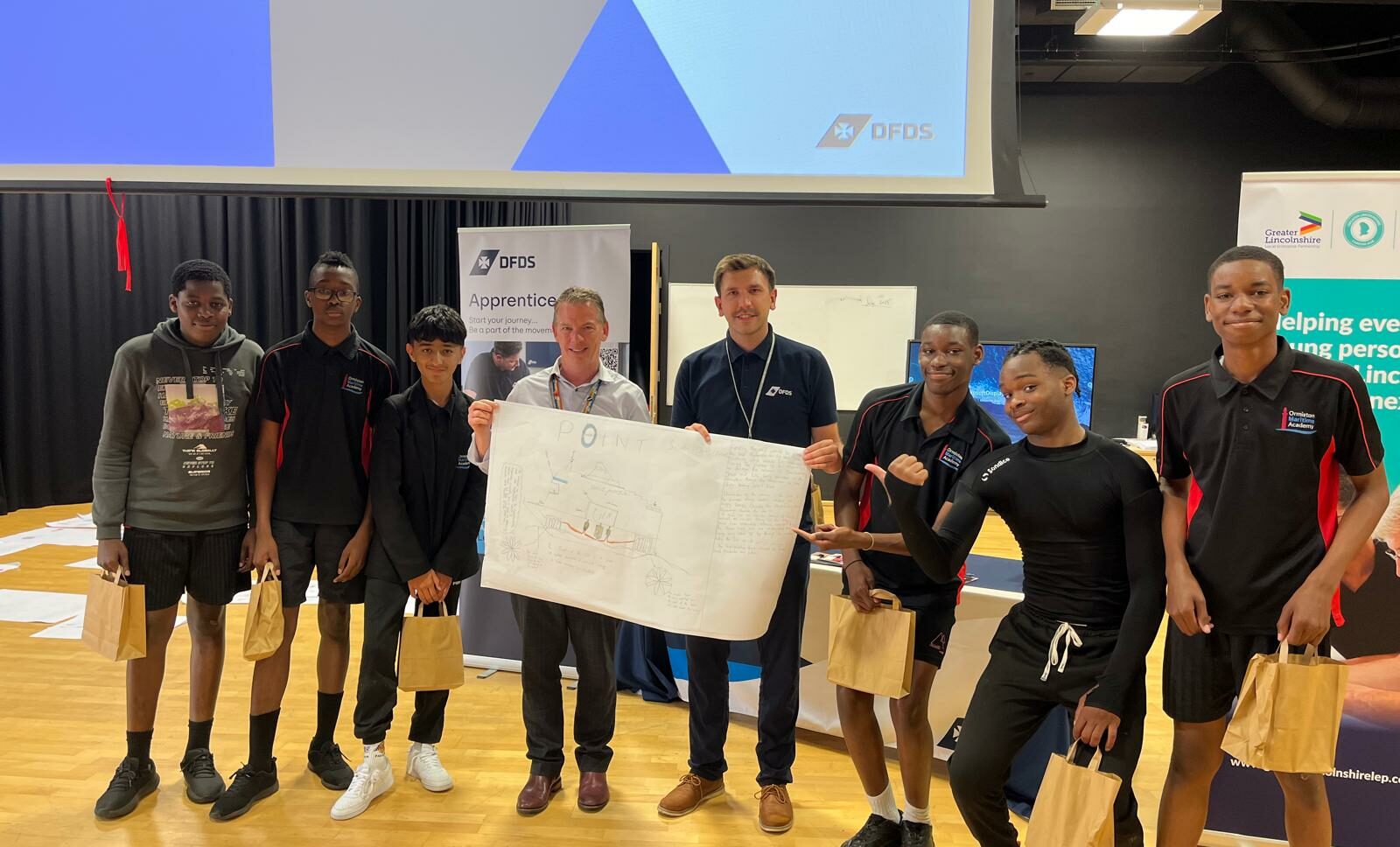
The future of logistics and maritime industries depends on fresh thinking and engaging the next generation of talent.
On Tuesday 8th July, Humber Freeport partnered with Ormiston Maritime Academy in Grimsby to deliver an exciting Innovation Hackathon which brought together 80 Year 9 students with industry professionals for a day of creative problem-solving and career exploration.
Bridging the gap between education and industry
The hackathon was proposed by the Freeport Innovation Liaison Group, which works on behalf of Humber Freeport to support innovation-led activity across the Humber estuary.
The Greater Lincolnshire Careers Hub played a central role in both organising and funding the event.
“It’s about bringing industry together with schools, working alongside the Careers Hub, and making those future connections so young people understand the opportunities available to them,” explained Halina Davies, Chair of the Freeport Innovation Liaison Group.
“Children across Greater Lincolnshire and the Humber have a broad variety of interesting employers on their doorstep, but they may never have heard of them before. Through events like these we can make introductions, begin to change past perceptions, and create greater aspiration”
The event concluded with prize presentations for the top three teams.
Real-world problem solving
Students began by testing their knowledge of Freeports and ports through a quiz, followed by presentations from DFDS, one of Europe’s leading logistics companies.
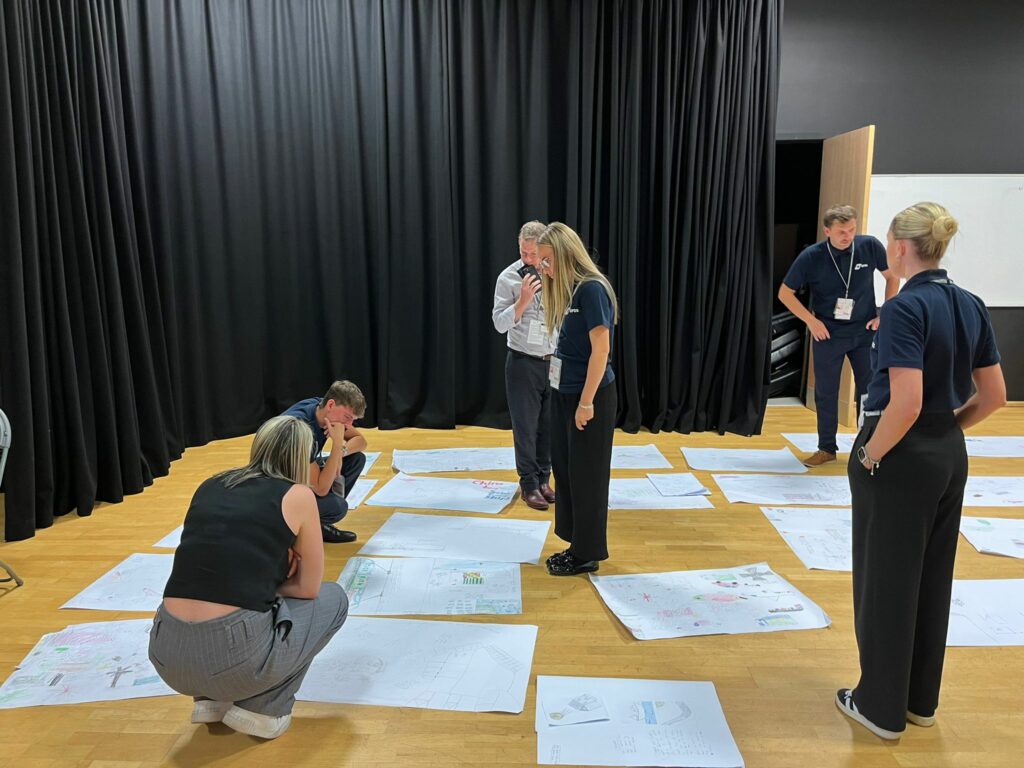
They were then presented with a real-world challenge: planning the fastest and most efficient transport route from Hamburg in Germany to Manchester and thinking about how they might help transform the future of the ports and logistics industry.
Oliver Burley, Process Improvement Partner at DFDS, highlighted the importance of early engagement.
He said: “We find a lot of young people in the area are unaware of the career opportunities that exist both in the ports and logistics sectors.
“What makes those sectors so exciting is there will likely be young people in five or ten years’ time, doing jobs that we don’t even know exist at the minute. The pace of change is extraordinary, and it’s a brilliant time to join the sector.”
Innovation in action
Working in teams throughout the day, students developed creative solutions that exceeded expectations. Participants proposed innovative ideas including solar panels on vehicles, wind turbines, drones and other sustainable technologies that reflected both their environmental awareness and forward-thinking approach.
Mr Burley said: “There’s been a wide range of different ideas. So many of these ideas are covering engineering, electric vehicles, solar technology, turbines, and so on. It’s all very creative, and very impressive.”
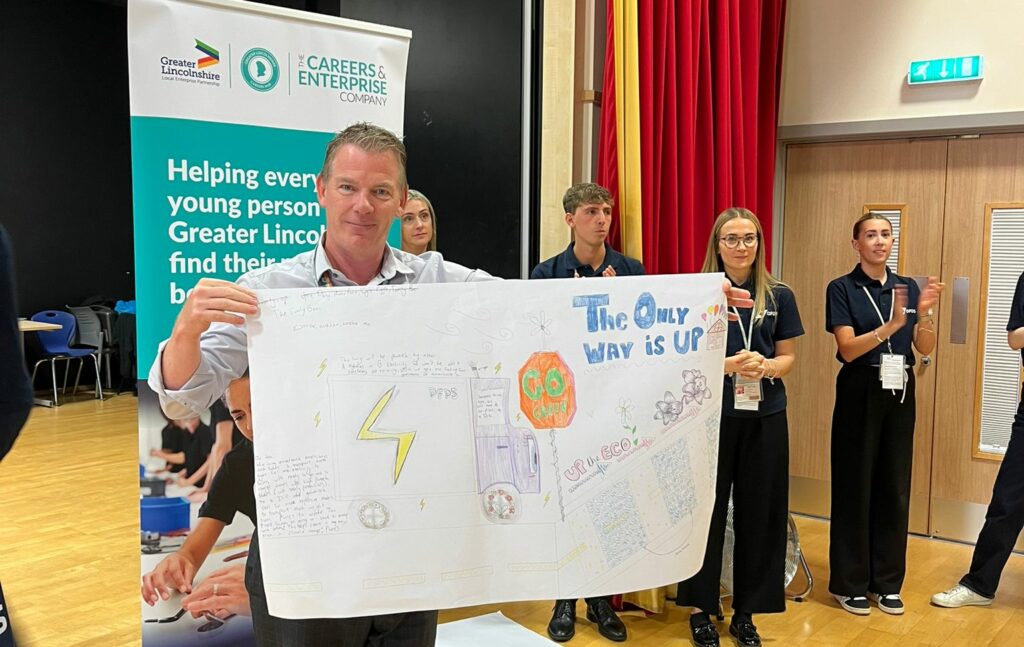
Andrew Byrne, Managing Director at DFDS
The need for fresh talent
Andrew Byrne, Managing Director at DFDS, emphasised the critical importance of engaging young people in the maritime and logistics sectors.
He said: “At DFDS, we support a range of educational and charitable enterprises for young people, sharing with them the opportunities that are in close proximity to them.
With approximately 80 different job roles across DFDS companies, Byrne highlighted how the industry has evolved beyond traditional perceptions.
“I think there’s a perception that working on the dock is old-fashioned, dirty and hard, manual labour, which it isn’t, it’s a modern workplace with a breadth and depth of careers,” he said.
“We need young people coming through. It’s quite an ageing workforce, but it’s also hugely primed for change in terms of modernisation, transformation and technology,” Mr Byrne added.
Impressive results and future opportunities
The event concluded with prize presentations for the top three teams, with winners earning the opportunity to visit DFDS and see first-hand the opportunities available to them.
The Hackathon represented more than just a one-day event; it’s part of a broader strategy to build lasting connections between education and industry. The collaborative approach involved partners including the Greater Lincolnshire Combined County Authority and support from the Freeport Innovation Network.
The success of this pilot Hackathon demonstrates the value of innovative approaches to careers education.
By combining real-world challenges with creative problem-solving, the event successfully raised awareness of career opportunities while inspiring the next generation of talent needed to drive the sector’s continued evolution towards sustainability and innovation.
